

The complexity of the protein transition and a microbial perspective: from soil to human
Evening lecture by Dr. Martina Sura organized by the Rotterdamsche Chemische Kring.
Evening lecture by Dr. Martina Sura organized by the Rotterdamsche Chemische Kring.
The complexity of the protein transition and a microbial perspective: from soil to human
Summary
By 2050, nearly 10 billion people will be living on Earth, and they will all need food. How can we ensure that we produce enough healthy food without depleting the planet’s resources? The solution lies in smarter, more sustainable and healthier diets, less food waste and future-proof agricultural systems.
The protein transition refers to the shift in consumption from traditional animal proteins towards more plant-based and alternative proteins such as insects, algae and microbes. The protein transition also offers opportunities for a shift towards sustainable animal and plant-based protein production that places less strain on the environment. However, the protein transition is not simply a matter of replacing animal proteins with alternative proteins. A future diet must also be healthy. How healthy a food is depends on various factors, such as the number and relative amounts of nutrients, their bioavailability and digestibility, and the entire food matrix in which a nutrient is found. The protein transition is a complex process that requires a systemic change, whereby the protein transition is not seen as an end in itself but as a means to strike a balance between climate, the environment and human health.
That is why I am also taking you on a journey through a microbial perspective: from the soil teeming with microbes, to the plants that grow on it, to the human health that depends on it. We will discover how microorganisms play a hidden yet crucial role in soil, plant growth, food quality and our own gut health. What does this mean for our future diet? What opportunities do protein-rich crops such as naked oats, seaweed or beans offer? And what new microbe-supported agri-food innovations are on the horizon?
About the speaker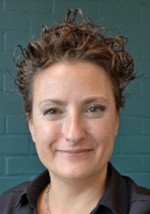
Martina Sura-de Jong took up her post as Professor of Protein Transition & Microbiome at Van Hall Larenstein University of Applied Sciences (HVHL) in Leeuwarden in November 2022. Born in the Czech Republic, she completed her undergraduate, master’s and PhD degrees in microbiology at the University of Chemistry and Technology in Prague. After completing her PhD, she initially worked as an assistant professor at the same university before moving to Leeuwarden in 2014 to take up a position as a lecturer-researcher and senior researcher in the Biotechnology programme. Her expertise in microbial ecology and molecular biology made her aware of the connection between soil, plants, food and humans, and the crucial role played by microorganisms in this. As a professor of Protein Transition, her mission is to translate existing knowledge and gather new insights into the microbiome, with a view to applying this to protein production and consumption that is in balance with nature and our health. In addition, she focuses on the use of microorganisms as a high-quality food source for human consumption.
Invitees are very welcome.
Please send an email to chemischekringrotterdam@gmail.com.