Excursion to Lubo Systems bv
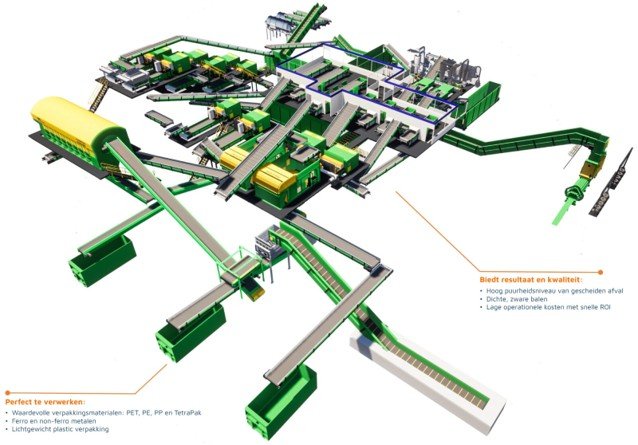
Excursion to Bollegraaf / Lubo: a system for recycling plastics from waste.
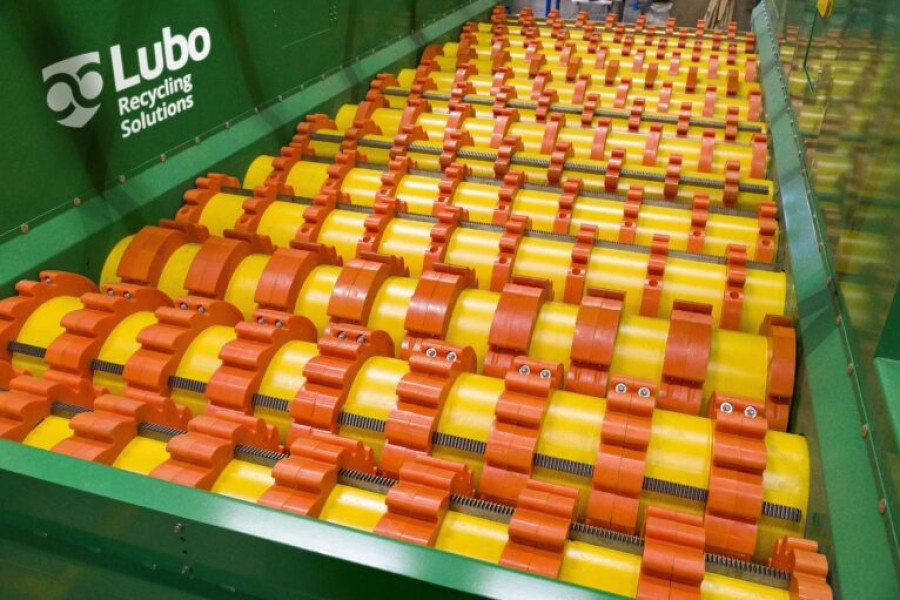
Excursion to Bollegraaf / Lubo Systems: recycling plastics from waste.
Programme
- Reception and welcome
- Presentation by Lubo/Bollegraaf
- Presentation on recycling, with a focus on plastic recycling
- Tour of the site, possibly including a visit to a second location approximately 1 km away
- Discussion followed by a Q&A session
- Closing remarks
Brief summary of excursion conditions:
- LUBO Systems bv and the Groningen Chemical Society accept no liability for any incidents that may occur as a result of your failure to follow the instructions of LUBO Systems bv staff and tour guides and/or due to carelessness on your part.
- The tour guide’s instructions must be strictly followed.
- You must not touch any equipment without permission.
- The requirements indicated by safety signage on the site must be observed.
- Participants enter the site, buildings and facilities at their own risk.
- Participants must carry valid identification with them.
The maximum group size for this tour is approximately 15–20 people. Places are allocated on a ‘first come, first served’ basis (see on the right).
The Bollegraaf Group is fundamentally committed to creating value from waste in a climate-friendly way. Bollegraaf is one of the oldest companies in the recycling industry; it is dynamic, continues to innovate and can therefore be described as the frontrunner of the entire recycling industry.
The rapid growth of the world’s population, coupled with rising consumption and production, is leading to increasing scarcity of a number of key resources, more volatile prices and ever more serious consequences for the environment. It is estimated that, based on the current rate of economic growth, we would need the natural resources of three Earths to continue to sustain the world’s population by 2050. This leads to the only obvious conclusion: that we must manage the resources our planet provides with care and that we must transition from a linear economy, based on the ‘take-make-waste’ principle, to a circular economy.
The circular economy is a systemic approach to economic development designed to benefit businesses, society and the environment, whereby products, materials and resources continue to circulate within a system of both technical and biological cycles. The circular economy is regenerative in nature and aims to gradually decouple growth from the consumption of finite resources.
The concept recognises the importance of an economy that must function effectively at all levels – for large and small businesses, for organisations and individuals, globally and locally.
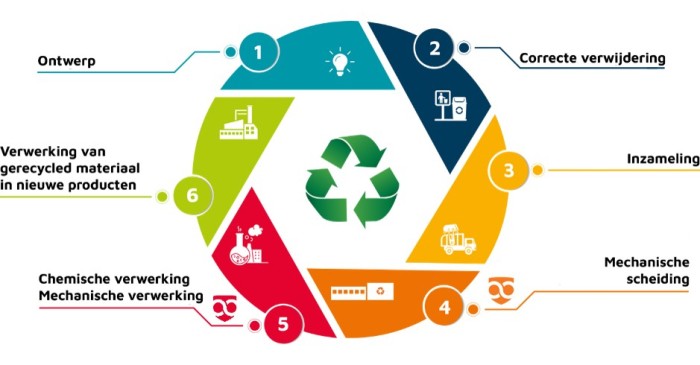
(Advanced) mechanical recycling is a key link in the circularity of materials, ensuring their high-quality condition in a cost-effective, automated manner and enabling their continued circulation in the market for secondary raw materials.
Innovative, effective solutions for recovering plastic from waste
Global demand for the recycling of used plastic is growing rapidly, as more and more applications are introduced to meet the increasing requirements and incentives to use recycled plastic on the path towards creating a truly circular economy. The Netherlands aims to develop a circular economy by 2050 – a waste-free economy that relies as much as possible on sustainable and renewable materials. This will have a significant impact on the conservation of natural resources, reducing reliance on landfill sites and protecting the environment from plastic pollution.
At the same time, recycling companies considering investing in equipment to separate plastic will expect a profitable return on their investment.
Effective and innovative design solutions from Bollegraaf and Lubo enable the production and supply of equipment that effectively removes plastic from waste and prevents it from ending up in landfill. Our equipment is currently being introduced into existing mixed waste streams and complete specialised (plastic) sorting plants.