

The Chemistry of Seeing
Evening lecture by Dr. Jaap Bruins Slot organized by the Rotterdamsche Chemische Kring.
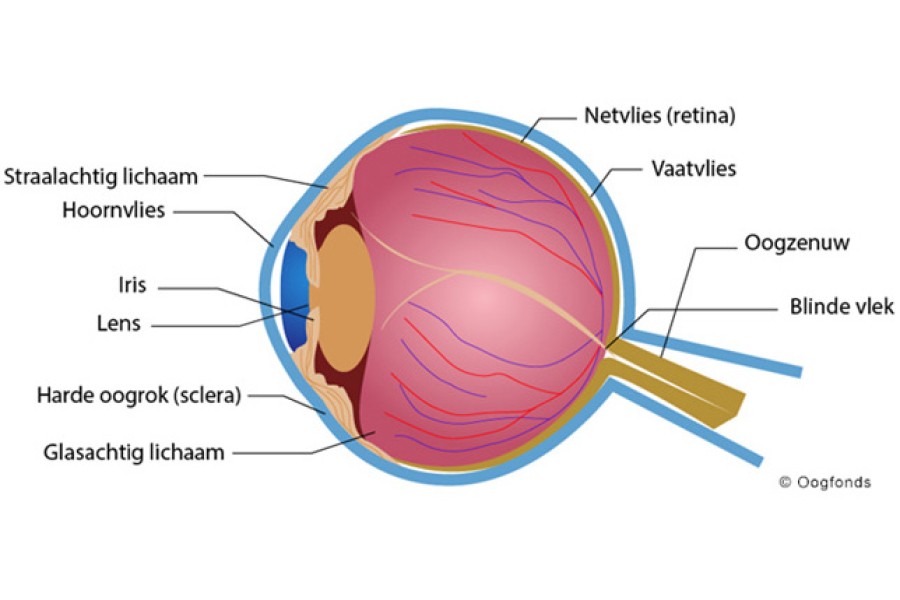
Evening lecture by Dr. Jaap Bruins Slot organized by the Rotterdamsche Chemische Kring.
The Chemistry of Seeing
Summary
For us humans, sight is the most important sensory system. In order to see, the following are required: something to look at, light, an eye capable of forming an image, the conversion of light energy into chemical or electrical energy, signal transmission, signal processing, image recognition and, consequently, the brain’s capacity to handle all these processes.
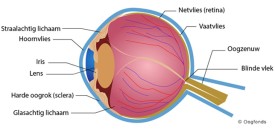 The introduction focuses primarily on human vision, delving in greater detail into the chemistry of the retina – the part of the eye where the energy of photons is converted into signals – and, in particular, the chemistry involved in this process. There are also brief digressions into evolution, vision in other animals, global research into vision, and the developing technology for seeing without eyes.
The learning objective is to gain an appreciation that vision is a magical process, one from which we derive great pleasure, and which we have been practising effortlessly for years, having unconsciously spent years learning how to do so. It also aims to highlight that hundreds of man-years of research are still needed before we can more or less fully understand human vision. There are two historical interludes in the introduction.
Biography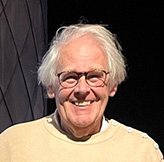 After completing his HBS-B, Jaap Bruins Slot (1948) chose to study chemistry at Utrecht University. Following a bachelor’s degree in the S2 stream (chemistry with biology, physics and mathematics), he went to Eindhoven University of Technology (TH-Eindhoven) for his master’s minor, where he completed a minor in organisational psychology within the business administration programme under Prof. Daniels. He then chose Analytical Chemistry as his major subject, graduating in 1972 with a thesis on the early stages of pattern recognition in gas chromatography-coupled mass spectrometry of monosaccharides, which led to a publication in the *Journal of the American Chemical Society* (JACS) (formally under Prof. Geo Dijkstra, but in practice under Hans de Ridder and Jan Vink; the latter may be familiar to you from his account in the CKZ publication from early 2025). In 1973, he was able to enrol on the medical degree programme, also in Utrecht, where he took the Hippocratic Oath in 1980. He then specialised in occupational and industrial medicine (KUN), followed by registration as a specialist in 1984.
He held paid positions as a chemistry teacher at the MMS in Rotterdam, as a research assistant (WM) at the Analytical Chemistry Laboratory within Prof. Auke Dijkstra’s group – now known as chemometrics – at Utrecht University (UU), and in a similar role at the WPO Chemistry department there. Subsequently, he worked as a research assistant in Social Pharmacy (also at UU). Following his medical degree, from 1980 onwards he worked as an occupational physician at the DGGD Zwolle (including the local council, police, water boards and education), as director and occupational physician at the BGD Zwolle (including Wehkamp, Tijl, Bouw, Artez) and as Chief Medical Officer (CMO) at Arbo Unie, where the focus was primarily on quality assurance, promoting interdisciplinary collaboration, lobbying, politics and legislation. Retired since 2009, he is a member of various historical, medical and chemical societies, including CKZ. His current activities are mainly in the domestic, agricultural and hobbyist (history, science) spheres.
follow soon.
Invitees are very welcome.
Please send an email to chemischekringrotterdam@gmail.com.